

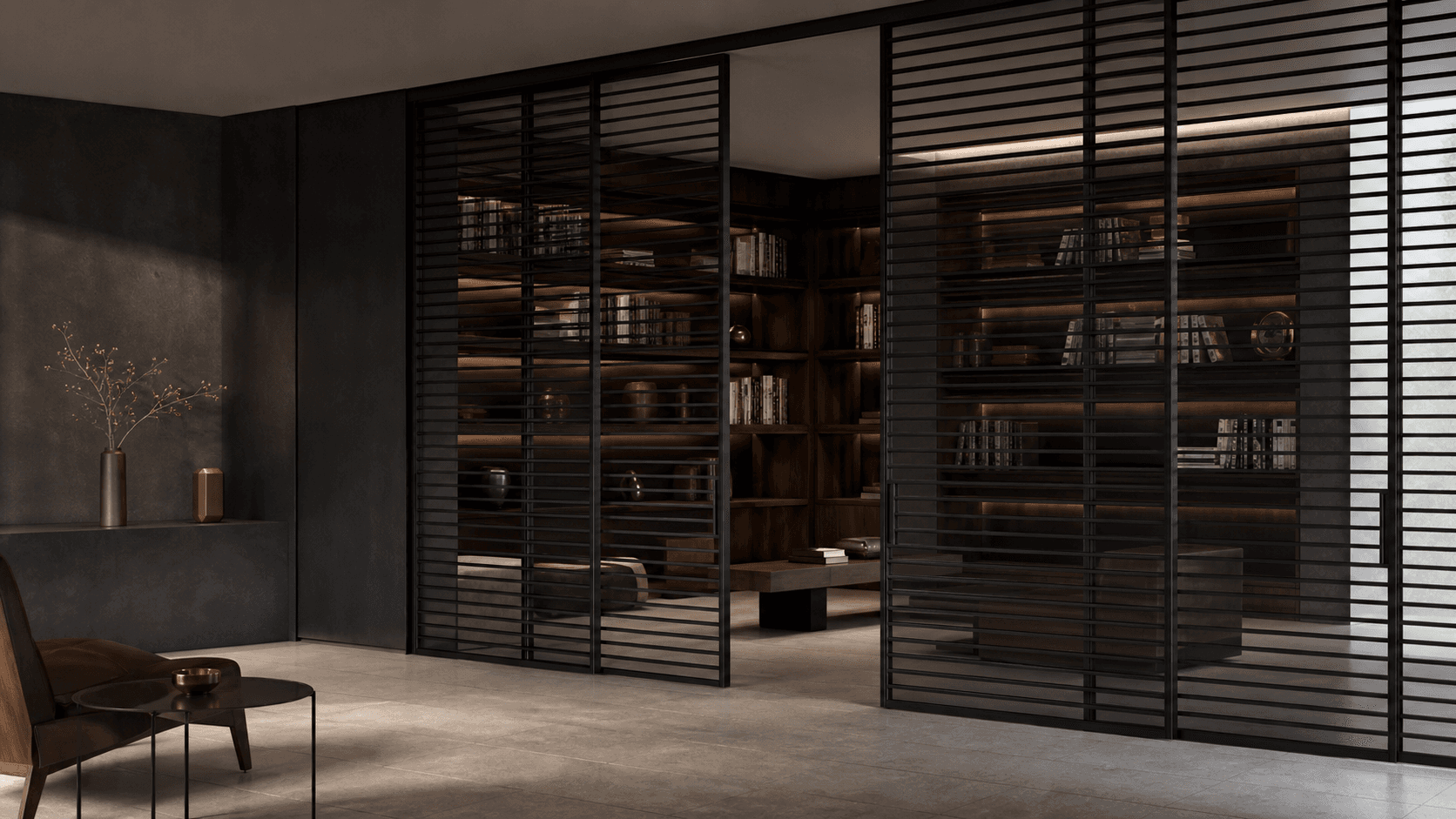
When selecting sliding hardware, it is tempting to begin with load ratings, track types or model numbers. Yet the first question that truly shapes the experience is simpler: how should this door change the space? Should a living room flow into a study, should a wardrobe disappear quietly, or should several panels release the widest possible passage? Once the way of living is clear, the technical choices gain direction.
Begin with how the space should live
The value of a sliding door is greater than the floor area saved by removing a swing radius. It can let one room move between openness and privacy, keep light travelling through glass, or create a clear boundary when needed. Panel count, stacking position and opening direction should follow circulation, daylight and daily routines—not the limitations of a hardware model chosen too early.
Choose the opening relationship, not merely a track
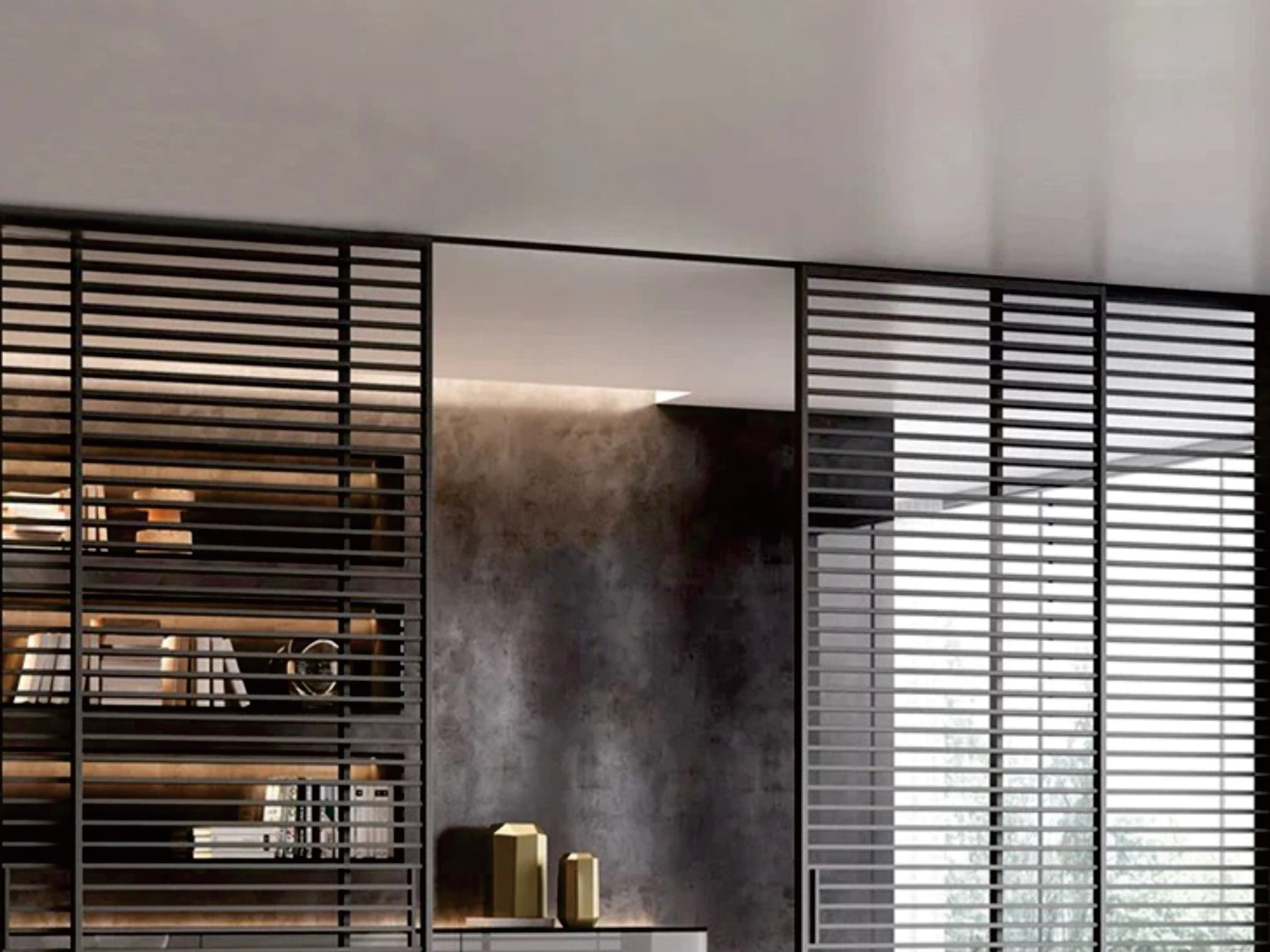
A single sliding door offers a direct transition. A pocket door lets the panel disappear when open. A synchronized three-panel system creates a wider passage within limited wall length. Whether the structure is single-panel, synchronized or concealed, hardware, profiles, panels and installation junctions must be planned as one composition. Before choosing, decide how much passage should remain, where the panels will rest and whether movement still feels generous when several people use it.
Decide how much structure you want to see
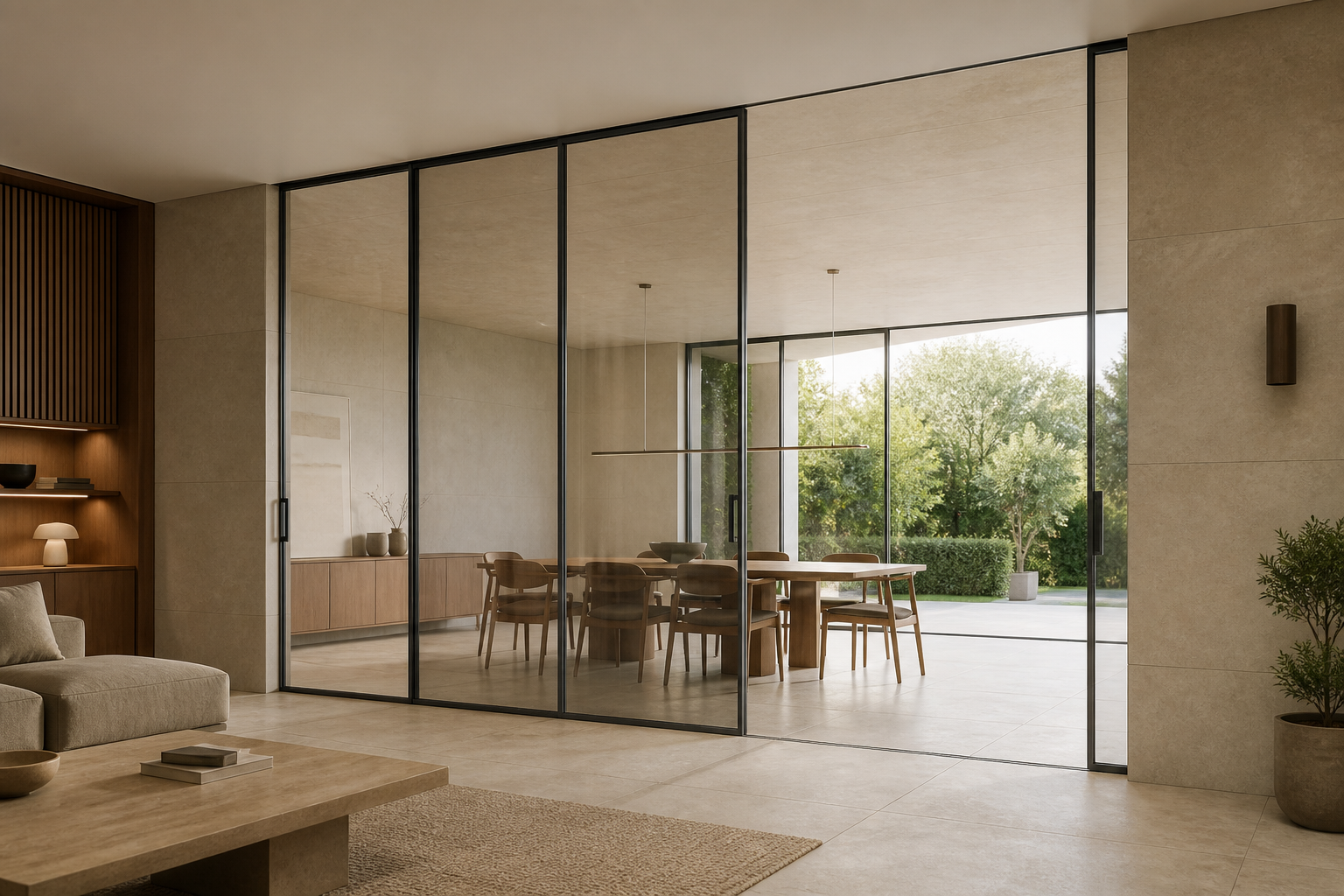
A track is not simply an installation component; it directly shapes the ceiling and opening. An integrated frame-and-track creates a continuous, legible edge. A semi-concealed track balances construction conditions with visual restraint. A fully concealed track allows the linear slot to recede as far as possible. None is universally superior—the right choice depends on the ceiling, frame relationship, service access and the expression you want the room to have.
Quiet, effortless movement comes from the whole system
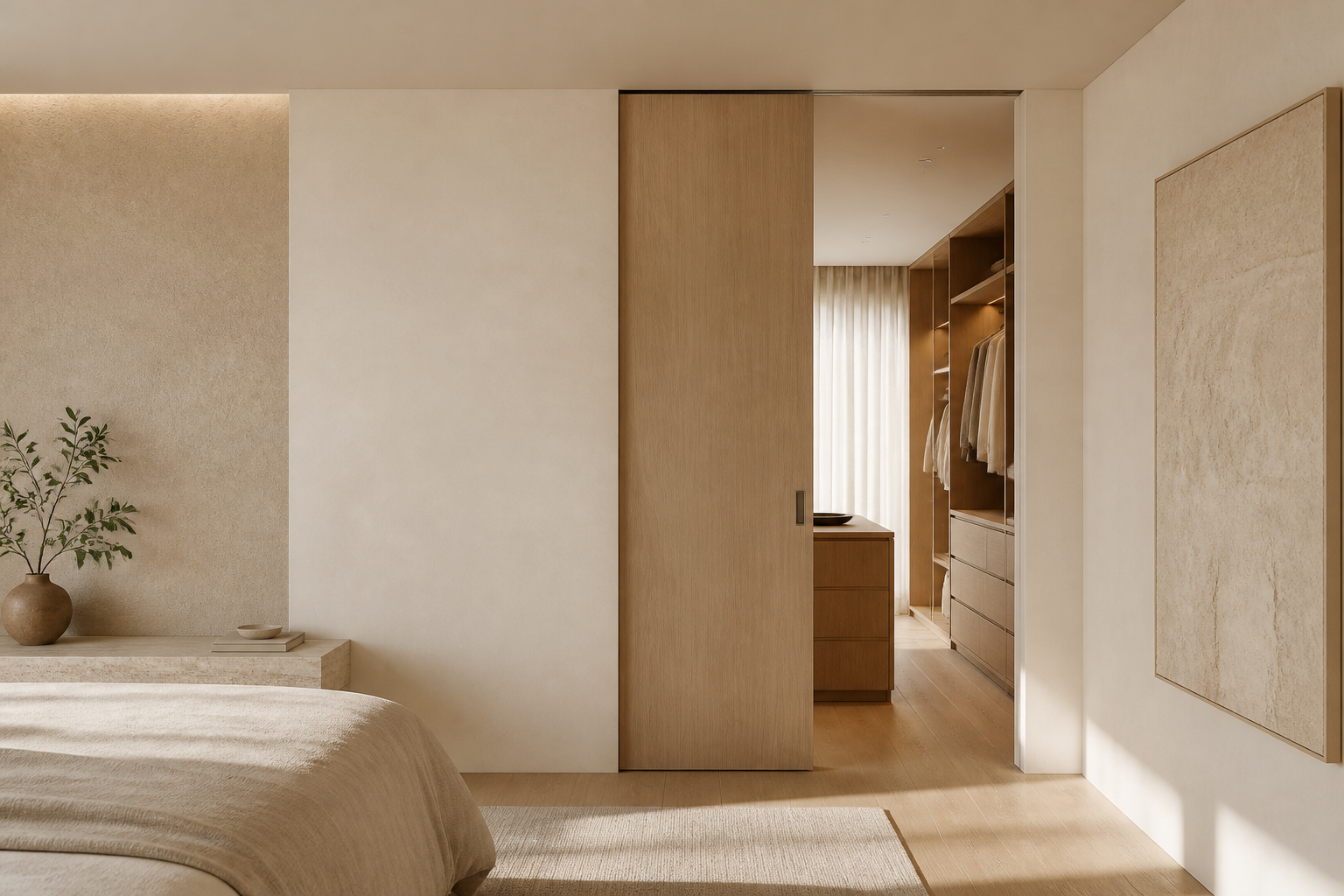
Panel weight, width, thickness and material determine roller capacity and connection. The track defines the path, guides control sway, and damping governs speed and sound at the end of travel. Looking at the roller alone cannot guarantee a refined experience. Large glass panels and synchronized doors in particular require rollers, tracks, profiles, connectors and damping to be verified as one system.
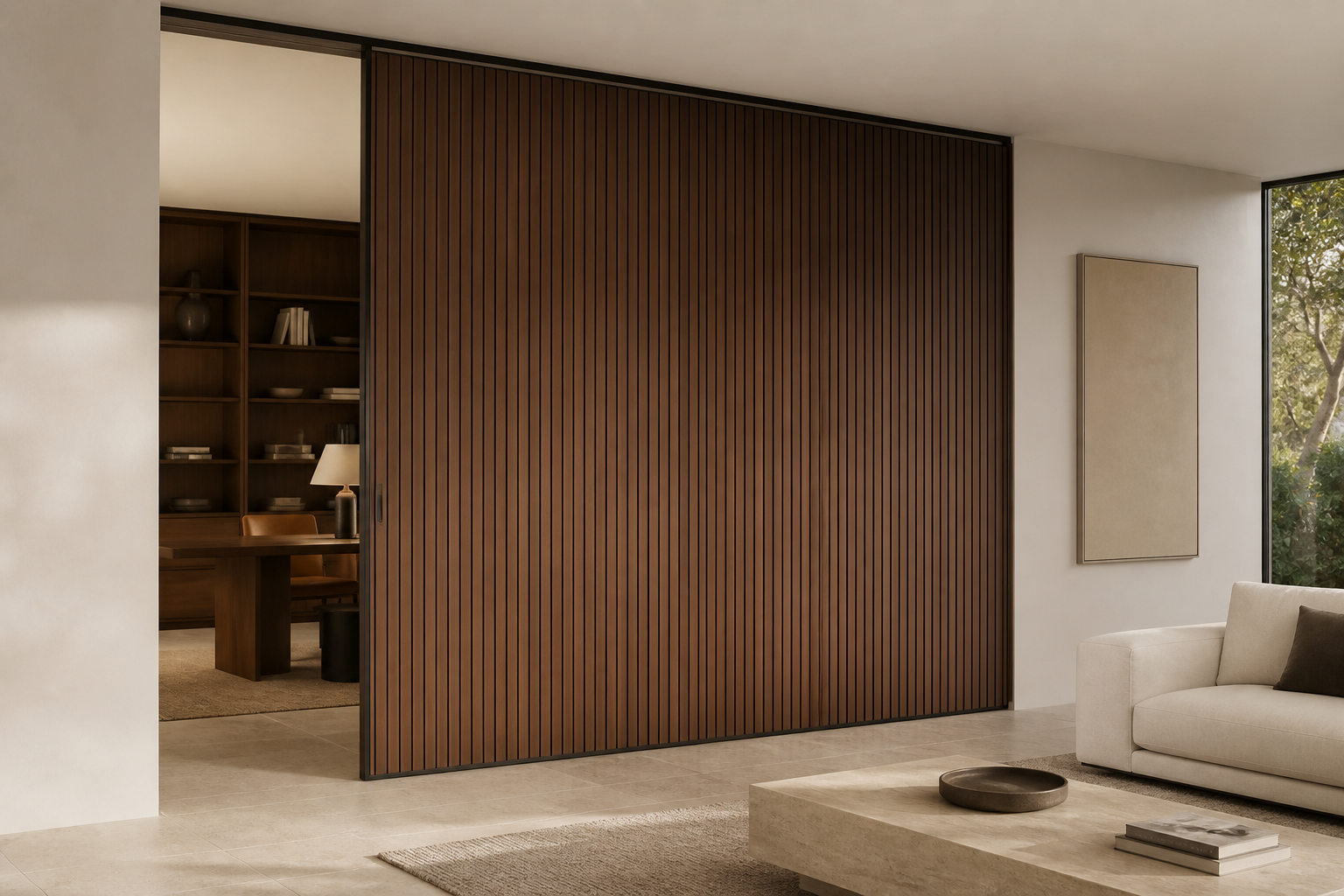
Serviceability is part of design quality
The cleaner a concealed structure appears, the more carefully future access must be considered. EKF's new minimalist sliding approach uses removable rollers so that service does not require dismantling a large area of ceiling. Adjustment and inspection access should also be reserved during installation. Mature minimalism is not simply about hiding hardware; it preserves visual calm while keeping the system reachable, adjustable and usable over time.
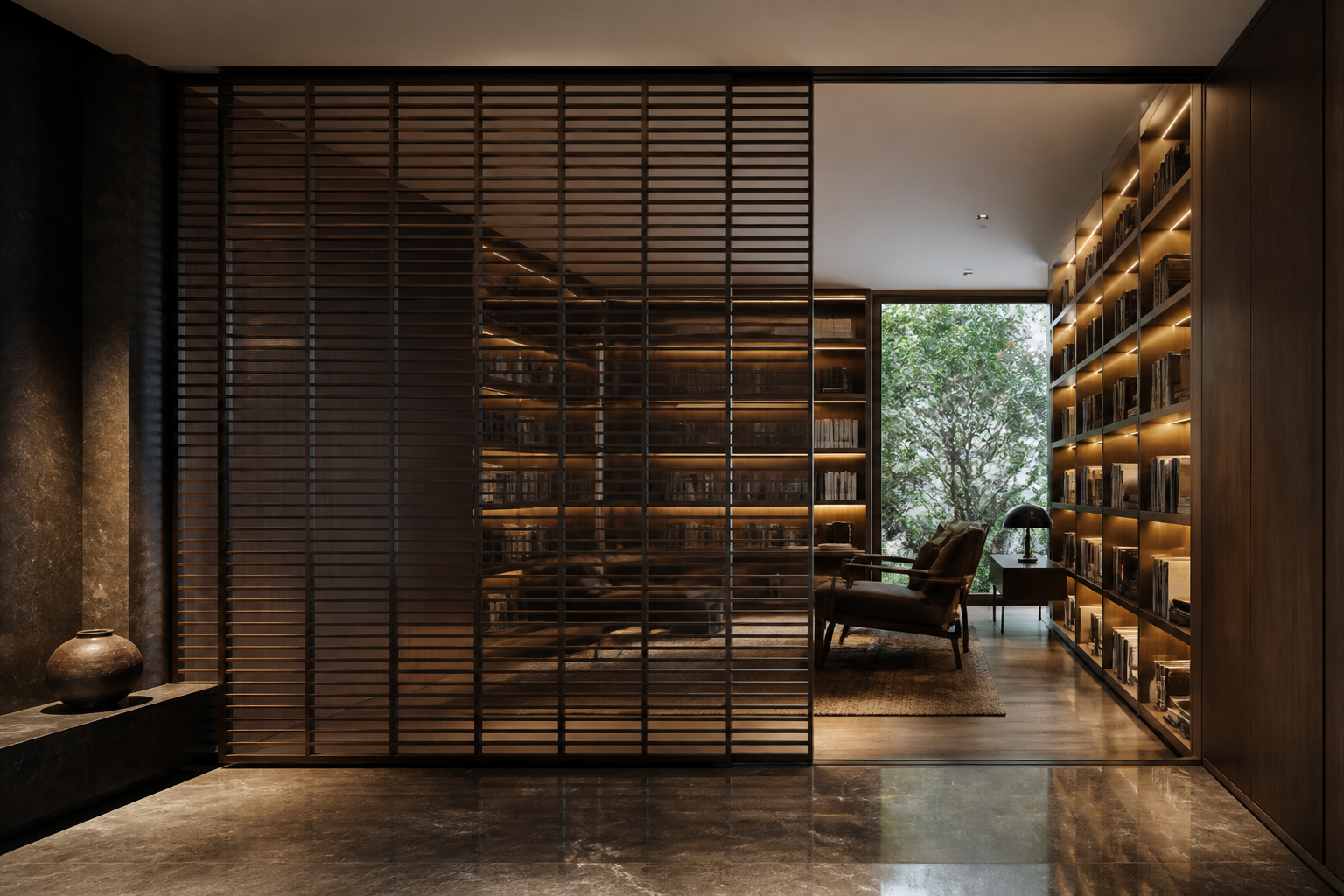
Finish determines whether the system belongs to the room
The colour of profiles and hardware should respond to the panel, wall, cabinetry and adjacent metal. The EKF minimalist sliding range offers multiple colours and surface choices, allowing profiles and hardware to respond to the panel, wall, cabinetry and adjacent metal. Finish is not decoration added at the end; it should be resolved with materials, light and atmosphere from the beginning so that track, frame and handle speak one language.
In the end, you are choosing a spatial experience
Define the spatial relationship first, then the opening method. Verify panel conditions, track visibility, movement and maintenance before coordinating colour and detail. Selected in this order, sliding hardware does more than make a door move: it lets a space feel freer when open, quieter when closed and composed after years of daily use.