

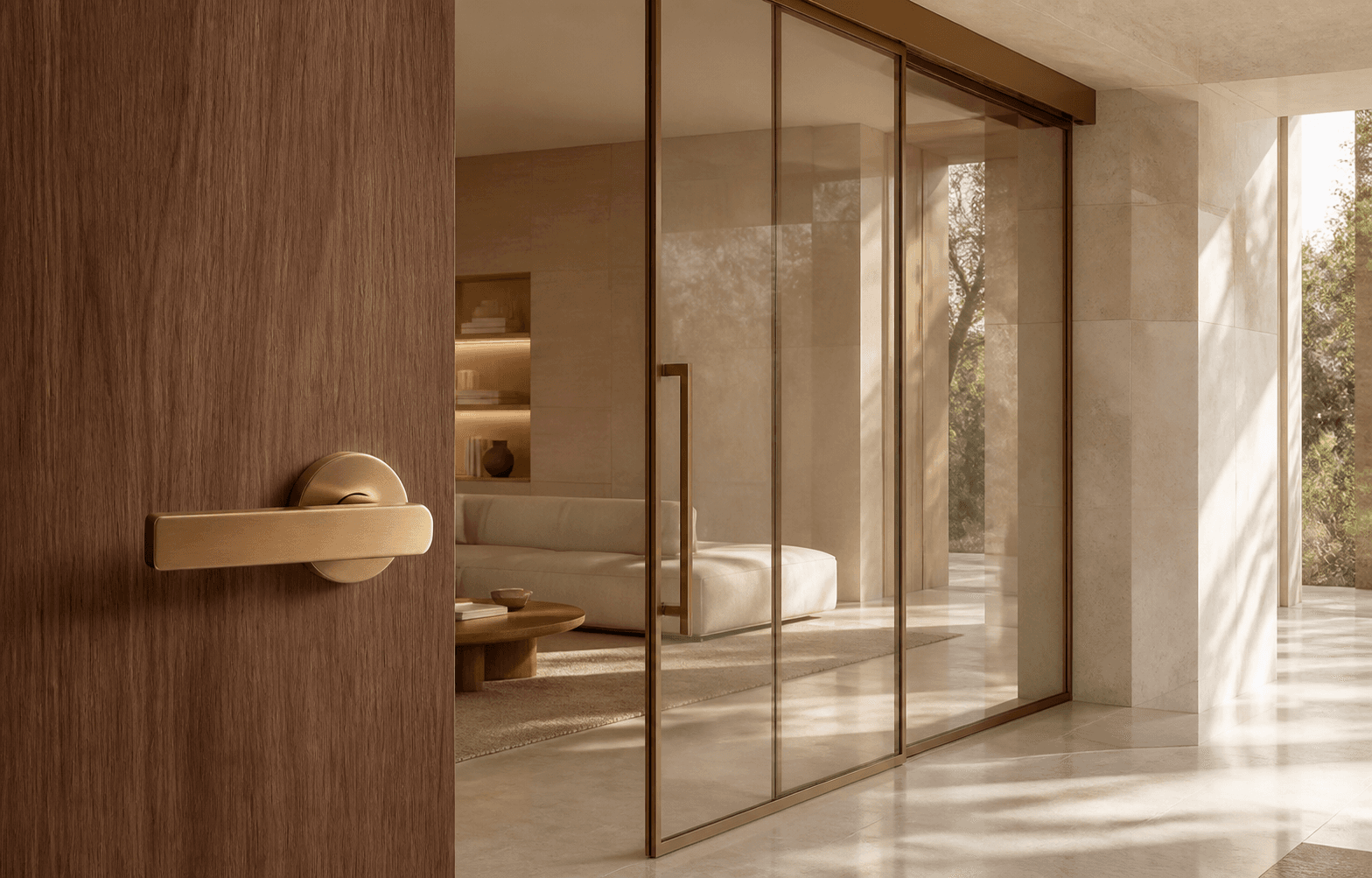
A truly comfortable space does not always look expensive at first glance. Its quality is more often found in repeated daily moments: the quiet opening of a bedroom door, the warmth of a lever when returning home, or the way light enters as a sliding panel moves aside. Hardware determines whether these actions feel natural—and whether the space remains composed after years of use.
Spatial quality lives in everyday movement
A door is one of the interfaces we touch most often, and hardware gives it character. Looseness, noise and abrupt resistance repeatedly interrupt daily life. Smooth rotation, measured damping and a lock that settles confidently allow each action to happen without thought. Good hardware does not ask for attention; it simply makes every arrival, departure, opening and closing feel better.
Beauty means completing the space, not decorating it
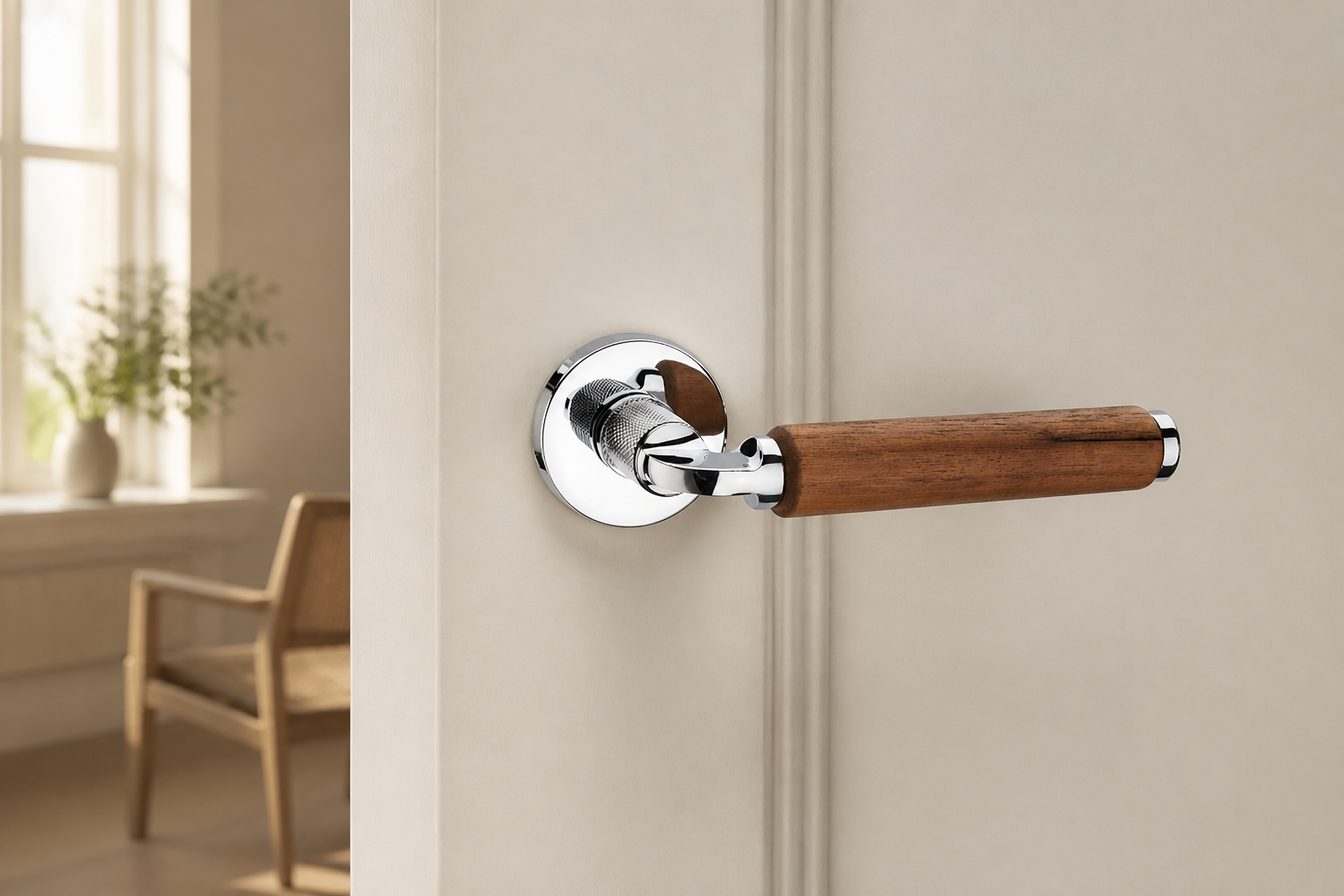
We believe hardware should not be an ornament applied to a door. It should form one composition with the panel, timber, glass and light. Lever length, rose proportion and the reflection of metal all shape the atmosphere. Restrained lines keep the elevation calm, while brushed and matte finishes reveal quality through touch. When colour connects naturally with surrounding materials, hardware becomes a detail worth approaching.
Smooth, quiet and stable—the luxury you do not see
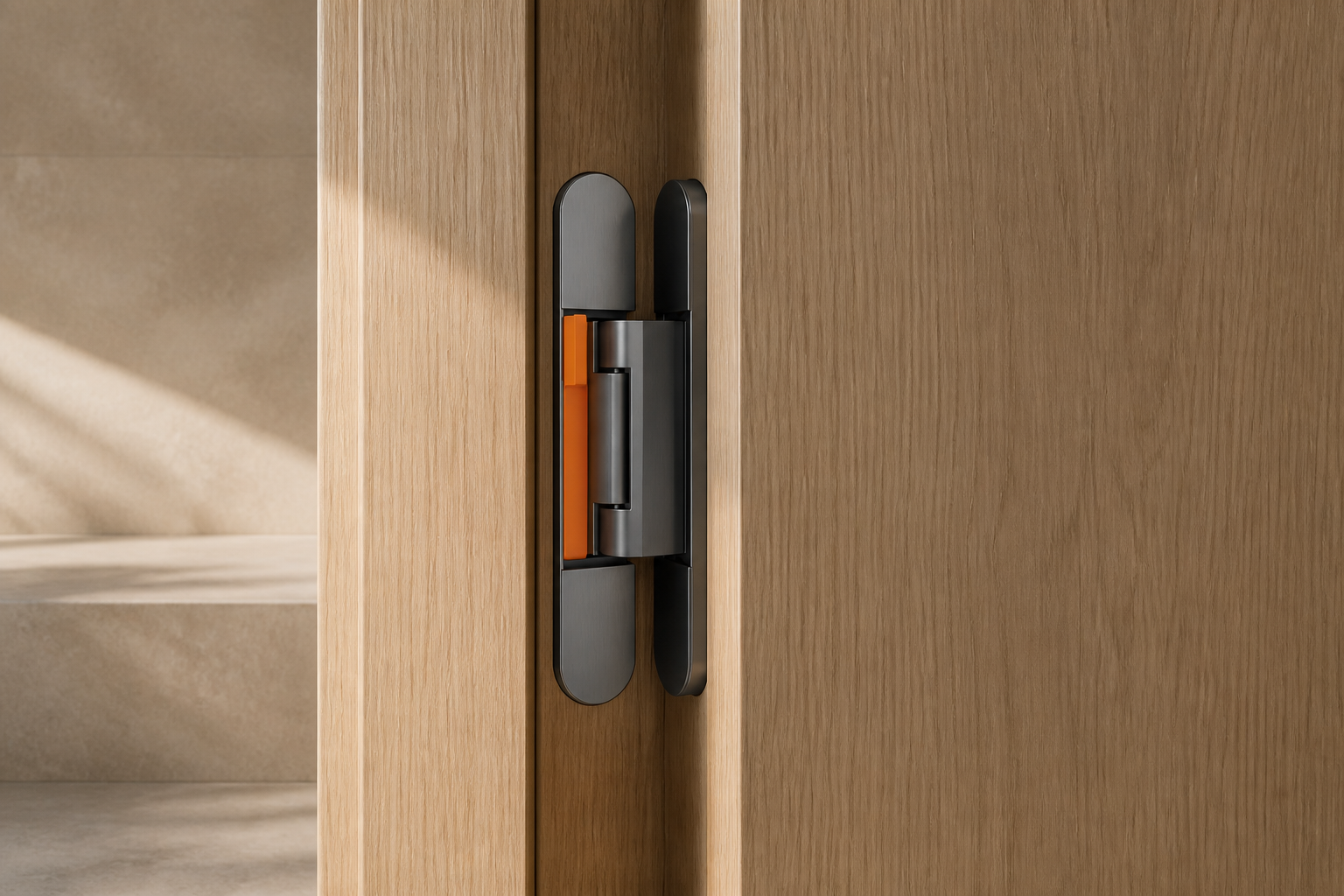
Beauty must be supported by dependable movement. Three-dimensional concealed hinges preserve a pure elevation while allowing precise adjustment. Lock bodies, stops and damping control the sound and force of closure. Serviceable roller systems let even large panels move with ease. The more resolved the hidden structure becomes, the more effortless the experience feels.
When doors move, space gains new possibilities
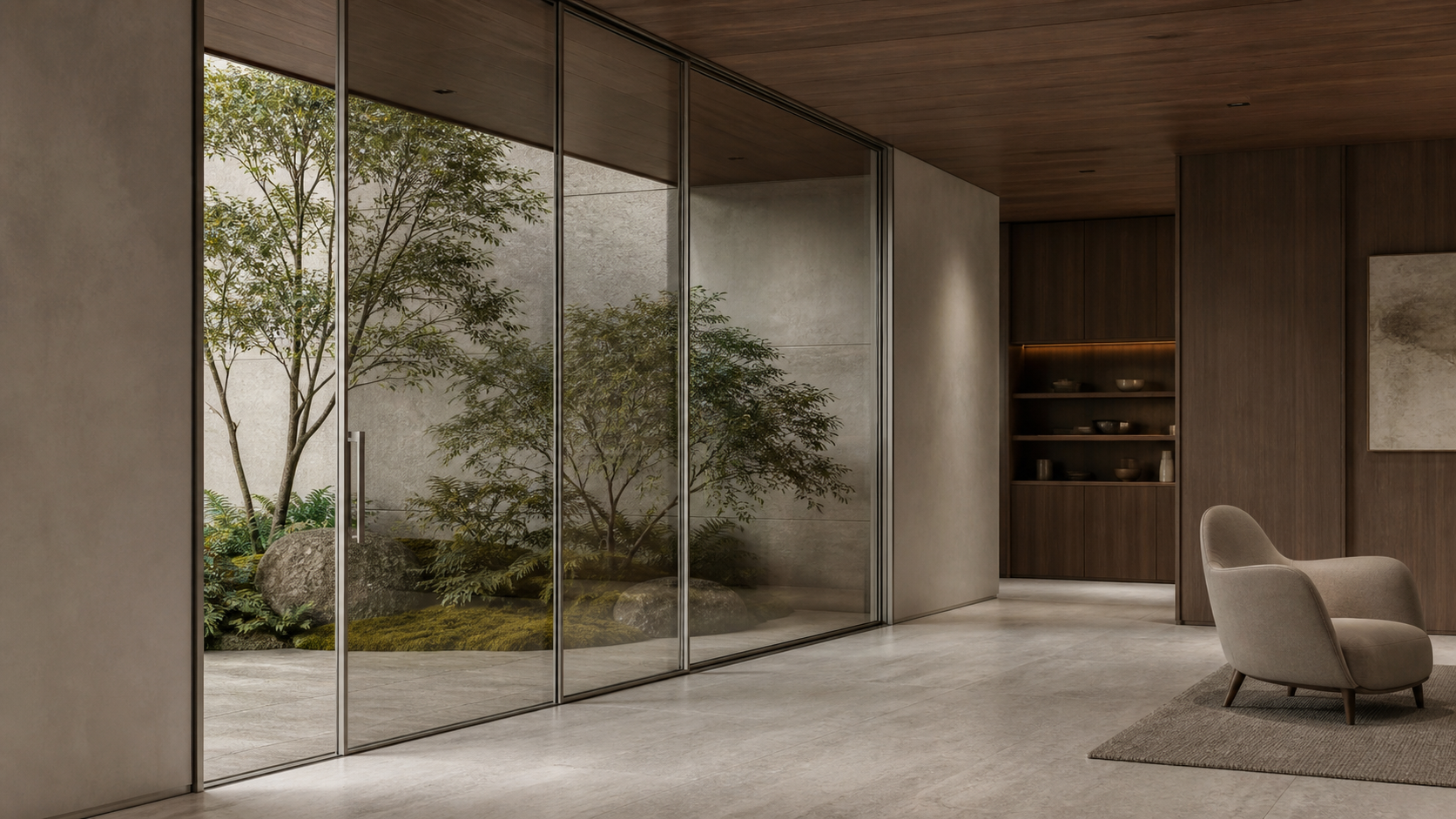
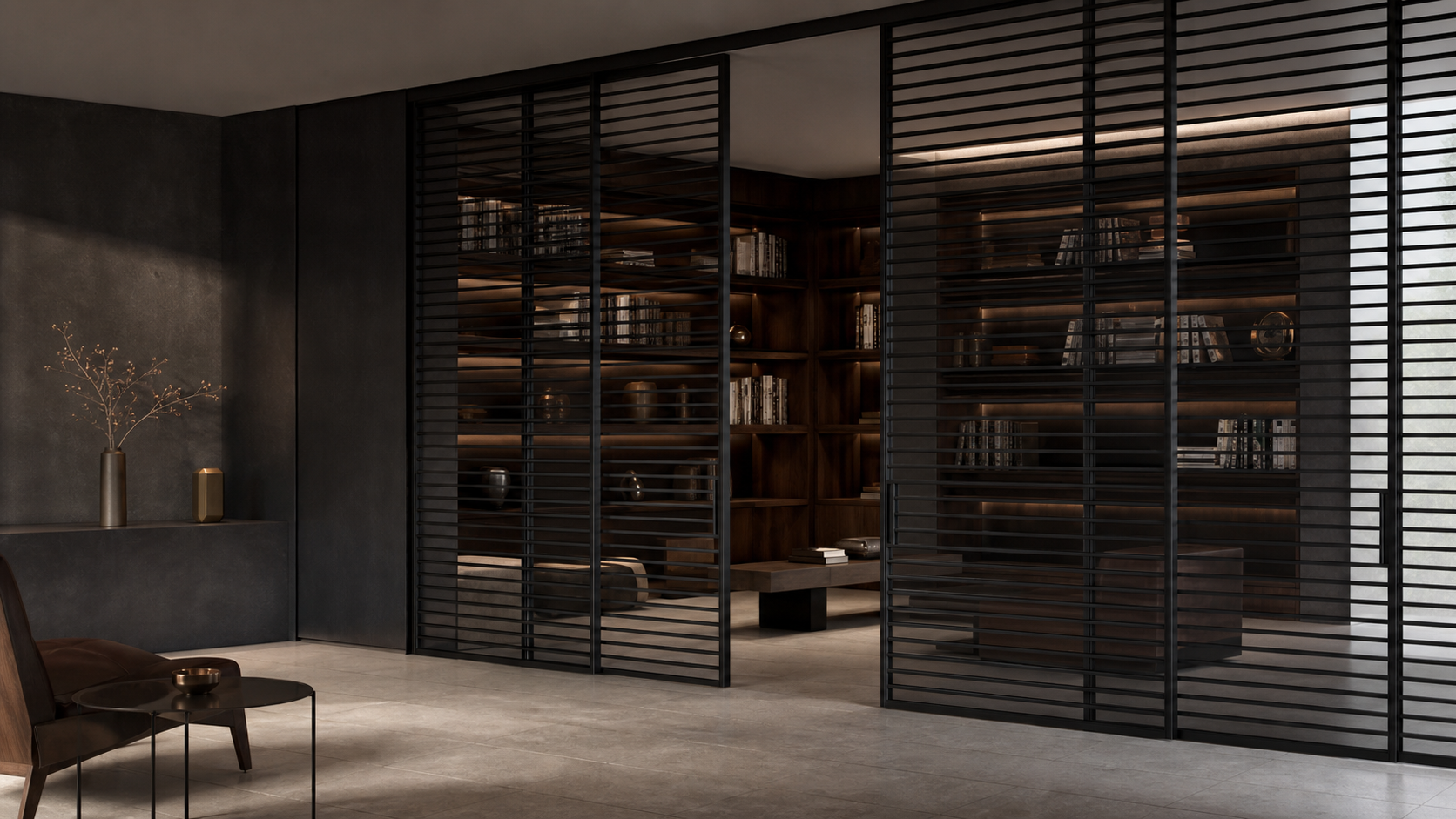
A hinged door defines entry; sliding doors reorganise openness and privacy. Integrated, semi-concealed and fully concealed track structures allow mechanics to recede, while slim frames and generous glass keep light moving. A living room can connect with a study, then become quietly separate when needed. Here, hardware does more than move a door—it helps space adapt to life.
One coordinated system gives the whole home one language
Locks, hinges, stops, lock bodies, cylinders, sliding rollers and slim-frame metal-glass doors create a complete experience only when form, finish and operation are coordinated. From the lever first touched by hand to the hinge and track hidden behind the door, every product has a different role while supporting the same spatial character.
Choosing hardware means choosing years of everyday life
Hardware is not a minor accessory added after the room is complete. It will be touched thousands of times and will continue to shape how a door sounds, moves and looks. Choosing hardware that truly belongs to the space means choosing quieter mornings, more graceful returns home and movement that remains clear and smooth over time. This is the value EKF seeks to bring through its locks, door-control hardware and sliding systems.